
Freie Schule Salzburg: permanent public-law status, grades 1 to 9, school start with Heureka in September 2026.
PaideiaEducation from first principles
We develop your school as a whole.
Educationally, operationally and financially.
Paideia clarifies processes, develops software for everyday school life and trains mentors. For independent schools, financial sustainability is part of the system.
 Momo FeichtingerInitiator of Paideia. He accompanies every partner school personally.
in Heureka: reading, writing, mathematics, German, English and general knowledge, each with explanation, practice and mastery check.
from the morning circle and the mentor playbook to the financial model. Written for daily practice, not for the shelf.
from Arriver to Self-Leader. Freedom grows with reliability, never with grades.
Signpost
A school as a whole. Three levels, one page.
Educational
The triad as the foundation, Heureka as the learning platform, maturity stages in place of grades.
Organisational
Processes that hold: a 22-chapter core handbook, mentor playbook, kaizen with review dates, software for daily practice.
Economic
Required operations first, then development: operating model, waterfall and terms that protect the school.
I · Education from first principles
Three questions. Three assumptions. Three principles.
First-principles thinking starts before timetables, subjects, grades and roles. We state the assumptions, test them in everyday school life and derive the next decision from them.
- 01
Starting question
From whom will a child accept guidance and feedback, and for whom will it make an effort?
AssumptionPeople learn deeply when they feel safe, seen and challenged.
Relationship carries. - 02
Starting question
Why does a person choose to stay with a difficult task?
AssumptionEffort lasts when learning has a purpose, real audiences and visible consequences.
Meaning pulls. - 03
Starting question
What grows with knowledge, tools, money, public reach and AI?
AssumptionEvery new ability expands a person's scope for action and therefore the consequences of their actions.
Maturation stays.
Your school can become one of the most valuable places in a person's life.
- EleutheriaFreedom
- AreteExcellence
- SophiaWisdom
- PhronesisJudgement
- EthosCharacter
- PhiliaCommunity
II · The triad
Relationship carries. Meaning pulls. Maturation stays.
Relationship creates safety for challenge. Meaning directs effort towards real impact. Maturation guides the power that grows with ability. Each stage builds on the one before it.

01 The foundation · Philia
Growth relationship
A child first learns from people it trusts. Warm and demanding at once: being seen and growing at the next step. That is why a mentor greets every child individually each morning, by name and with eye contact. And every child has its own conversation every week, eighteen plus two minutes that belong to that child alone.
How we recognise it: every child could say, this person really knows me and challenges me in a meaningful way.
Relationship before operations

02 The path · Logos
Meaningful creation
Learning goes deep when it matters: real projects, real works, real audiences, real feedback. Every child works on its important project. Mastery work secures the skills, the project shows what the skills are for. With every task we ask: who does this count for?
How we recognise it: works leave the school and find an audience that is more than a grade.
Meaning before system

03 The goal · Sophia
Wisdom and power
Education gives power. Knowledge, money, tools, public reach and AI expand a person's scope for action. Wisdom considers the consequences. Appreciation keeps the value of other people, their work and our shared world in view. Access to powerful tools therefore grows with demonstrated responsibility.
How we recognise it: a child can explain whom a project serves, what consequences it may have and how it will take responsibility for the freedom entrusted to it.
More power requires more maturity
Adults combine high warmth with high expectations. Belonging, voice, breaks and movement apply from the start. Maturity stages govern additional freedom and access to higher-risk tools.
III · A day as the first school lives it
An example, not a recipe. Your school builds its own rhythm.
This is what a core day at Freie Schule Salzburg looks like, school hours 08:00 to 13:30. Paideia prescribes no timetable. Every building block fits into existing lessons, afternoons or study times, and the triad carries in every form.
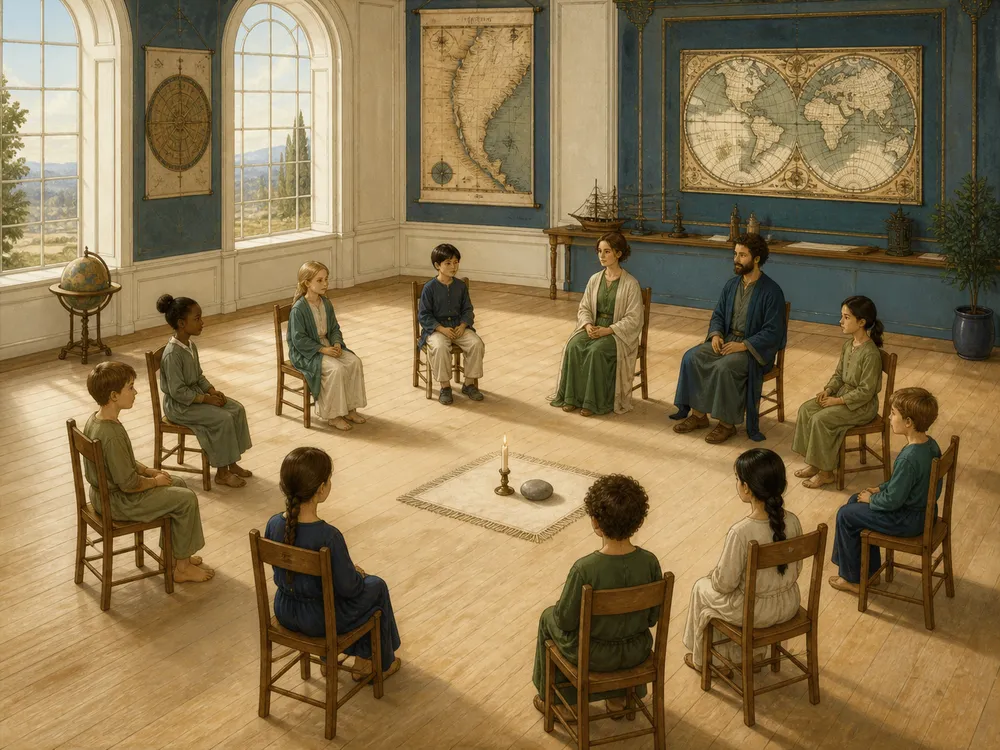
08:30
Morning circle
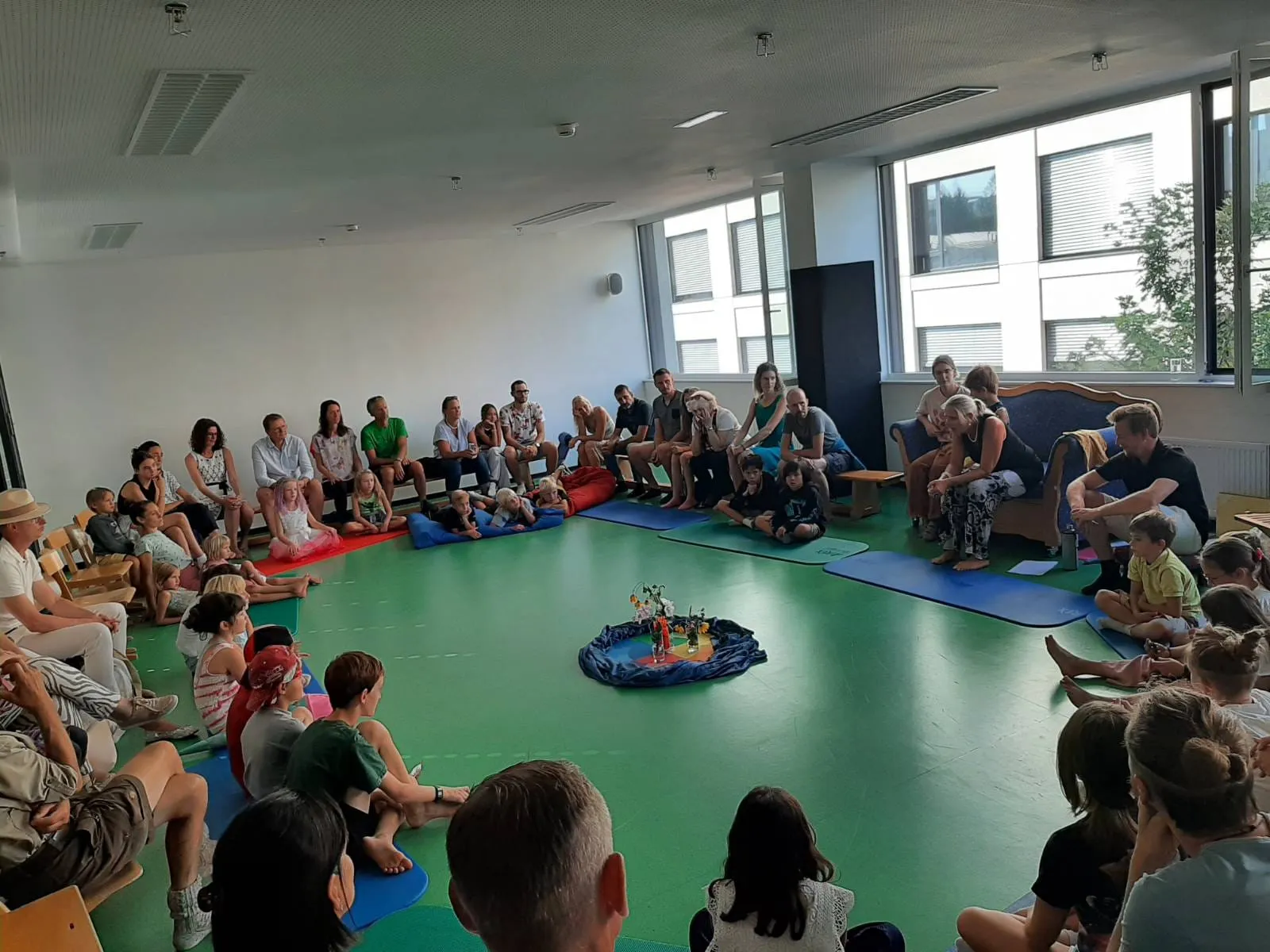
Thirty minutes, a circle of chairs, a talking stick. Every child is seen, everyone knows what happens today. A many-ways question opens thinking, the gratitude round practises appreciation, morning exercise or morning breathing wakes the body.

09:00
AHA time
Attend and attempt, hunt and hypothesise, apply and arrive at the aha. Every child learns in Heureka at its own pace up to mastery. Mentors explain, model, diagnose and coach on site.
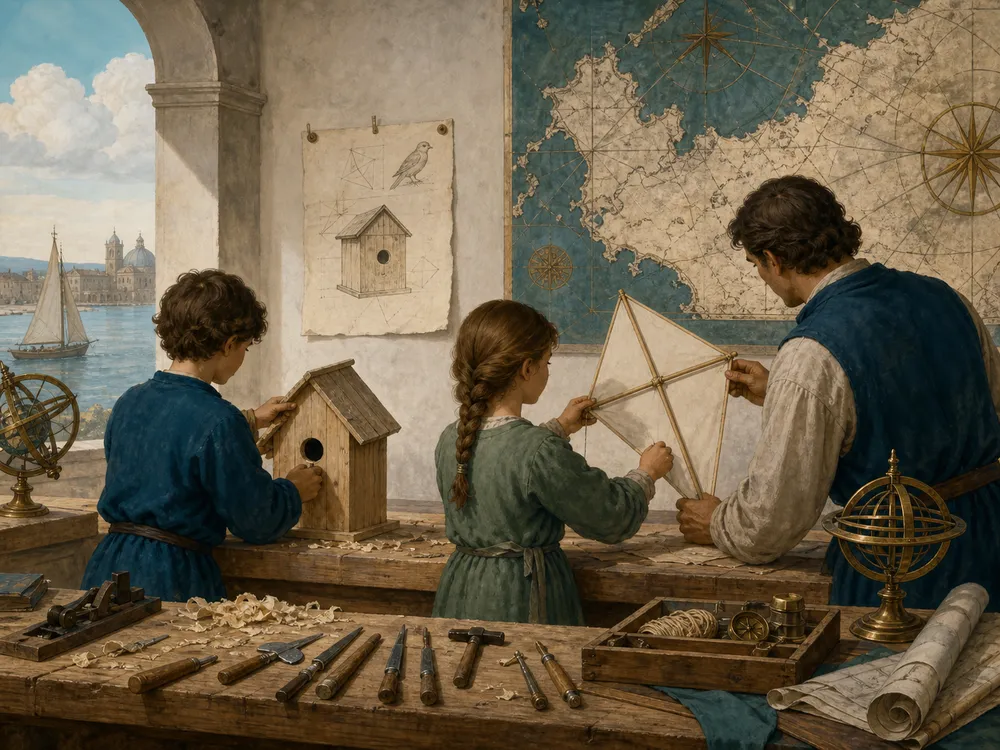
11:00
Project time
Every child's important project: from seed through the seven-day test and stages to the expo with a real audience. This is where the skills from AHA time show what they are for.
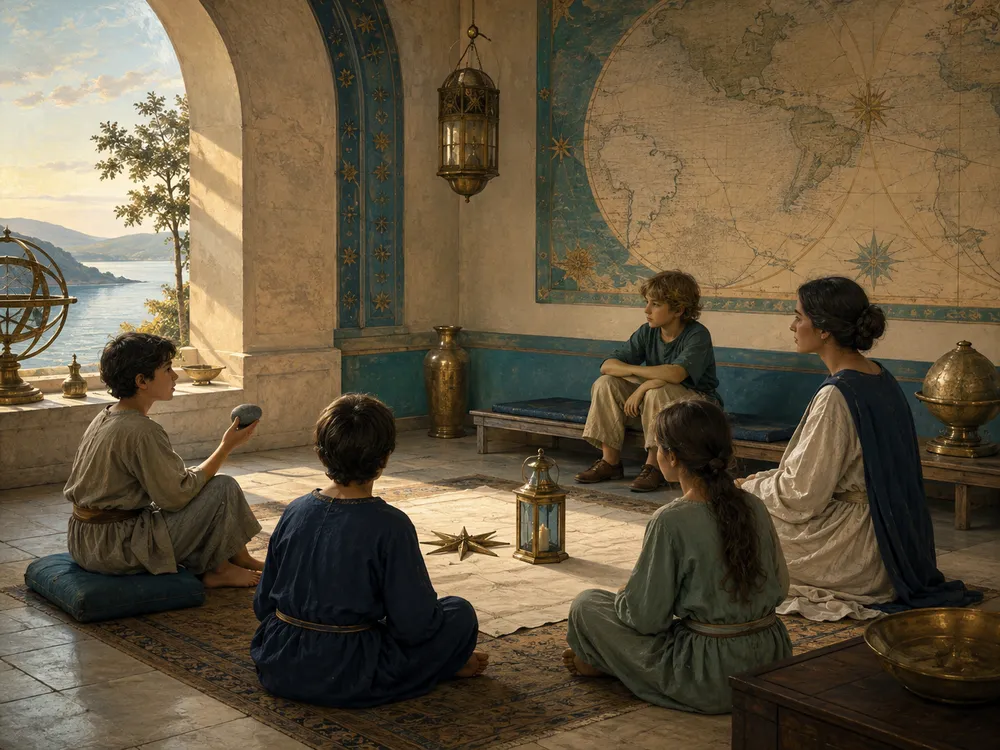
13:00
Daily reflection
Stars and wishes in the mentor group: what was good today, what do I wish for, what did I commit to. Kept commitments become maturity points, one to five per day.

Monday
One-to-one
Eighteen plus two minutes for every child, every week. What are you working on, what makes you happy, where is your next step. Documented through the conversation assistant in Heureka, while the SOLE session with one big question runs in parallel.
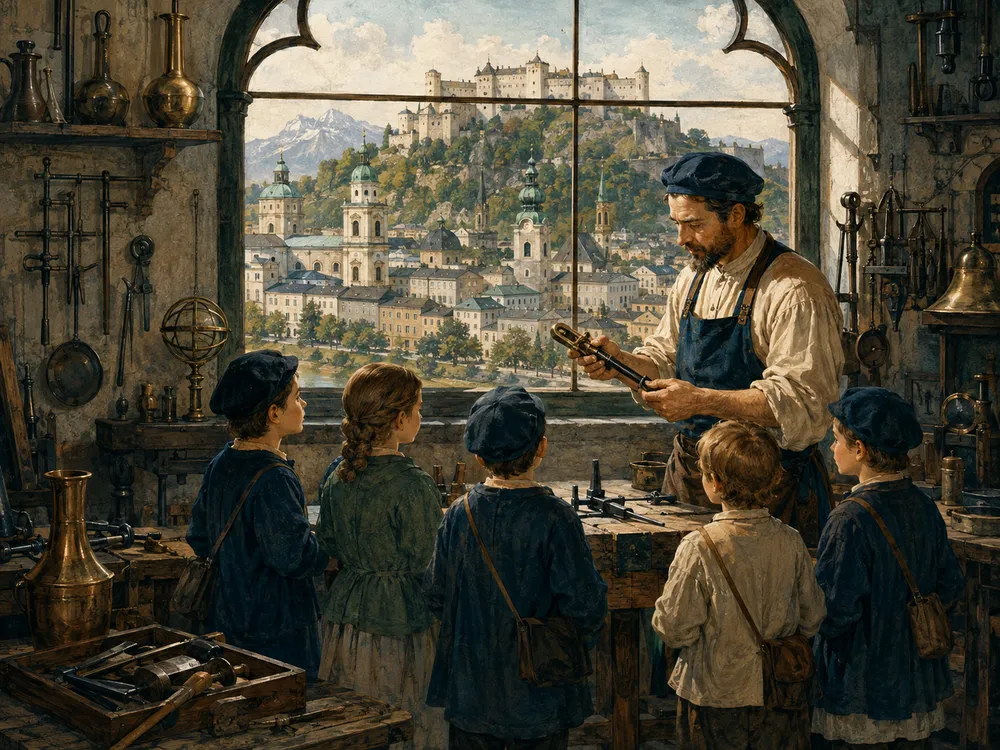
Friday
Practice day
The school goes out into the world or the world comes into the school: a company, a workshop, an experiment, cooking, an expert visiting. Reality examines more strictly than any exam.
| Monday | Mentoring and planning day | Morning circle with the week ahead, one-to-ones with every child, SOLE session, team meeting after school |
|---|---|---|
| Tuesday to Thursday | Core days | AHA time in the morning, then sport, club time or project time and expo production |
| Friday | Practice day | Excursion, company, experiment, cooking, experts: getting in touch with the real world |
Connecting to every school type
Paideia adapts to the school. The school stays as it is.
Heureka, processes and quality are building blocks. Each works on its own, together they make Paideia. What already holds at your school stays. What is missing, we connect.
- Heurekathe learning platform
- Processescore handbook, playbook, onboarding
- Qualitykaizen, review rhythms, quality log
- Rhythmsmorning circle, AHA time, one-to-one
- maturity stagesfreedom that grows with reliability
Mainstream school
primary, middle and grammar school
Heureka in practice, support and free-work lessons, one-to-ones in the rhythm of the class teacher, maturity stages as class culture. Curriculum, timetable and certificates stay as they are.
Independent and private schools
own operator, own culture
The whole system or single building blocks, from the morning circle to the kaizen rhythm, translated to rooms, team and operator. Freie Schule Salzburg is the first case.
Progressive schools
Montessori, Waldorf, Jenaplan, Freinet
Heureka as the mastery track for reading, writing and mathematics, processes and quality log alongside your own pedagogy. The method stays yours, what it carries becomes visible.
All-day and afternoon care
after-school care, supervision, study time
AHA time as a protected learning window in the afternoon, project path for free time, week view for parents, mentor playbook for the care team.
Learning groups and home education
external candidates, Matura preparation
Heureka as the core with Matura compass and competence map, one-to-ones and maturity stages for the adults, portfolio and reports as evidence.
IV · Heureka, the learning platform
Heureka gives adults their time back and children their next step.
Our own mastery learning platform, built for everyday school life. A child sees exactly one next step. A mentor sees who needs them right now. Parents see what counts. Leadership sees whether the school holds. Software replaces no relationship here, it replaces the clutter that otherwise eats relationship.
What Heureka can do
- Mastery gateYou move on from 90 per cent certainty, otherwise into the gap path. Mastery beats pace.
- Help ladderSeven steps from a hint to an explanation by the mentor. Help is part of learning.
- Read-aloud everywhereEvery page, every task, every explanation. Picture and read-aloud mode even before the reading threshold.
- Handwriting on paperWriting is done by hand. A photo brings structured feedback on the sheet.
- Project pathSeed, seven-day test, stages, expo, portfolio. Confirmed by the mentor, led by the child.
- maturity stagesSix stages, milestones instead of criteria, never tied to learning progress, no leaderboards.
- AI as dialogueSocratic questions instead of ready answers, graded by maturity, logged for the mentor.
- Weekly reviewFor families, on Sundays, opt-in. Only what parents really need.
- Matura compassReal Zentralmatura tasks in mathematics, German and English, unlocked with a stated reason.
- Feedback bottom rightSpeak, write or mark the screen. Usually reviewed within 48 hours.
- Character studioA character that belongs to the child. No purchase advantage, no loss mechanics, no leaderboard.
- On every deviceInstallable as an app for children, mentors, parents and leadership. Also runs in the wired school.
V · Six maturity stages
Freedom grows with reliability. Never with grades.
The maturity stage system makes growing self-leadership visible. It describes observed reliability, consideration and the handling of responsibility. Every child stands on stage zero from the first day without having to do anything for it. Milestones are signs that a conversation is worthwhile. And every stage comes with a real object that is handed over.
 0
0Arriver
Xenia · Hospitality
You are here, and you belong. You need to do nothing and prove nothing for that.
 1
1Companion
Philia · Community
You settle into the community and its rules and move freely within an accompanied frame.
 2
2Reliable one
Ethos · Character
You keep your own commitments and work without someone sitting next to you.
 3
3Maker
Arete · Excellence
You steer your project time yourself and handle tools responsibly.
 4
4Co-responsible
Phronesis · Judgement
You voluntarily take on shared responsibility for others or for a room.
 5
5Self-leader
Eleutheria · Freedom
You largely decide for yourself and carry the culture of the school.
Maturity points come from kept commitments, one to five per day. Basic autonomy, belonging, breaks, movement and voice are never earned through stages.
The guiding sentence
Paideia is education carried by relationship, pulled by meaning, directed at the maturation of the whole person.
So that young people become deeply human, capable of judgement and effective in a world full of powerful tools.
VI · Processes and strategies
A school needs more than a good idea. It needs processes that hold.
Everything Paideia builds at a school is written down, tested and repeatable. The path starts with required operations, leads through roles and rhythms to the platform and only then to growth.
- 01
Diagnosis
What is really unstable: leadership, finances, parent trust, admissions, team, rooms, offer or communication?
- 02
Secure required operations
Staff, facilities, administration, insurance, regulatory obligations and a minimum buffer come first.
- 03
Clarify roles and team
School leadership, board, mentors, deputies, admissions and parent communication receive clear ownership.
- 04
Introduce the Paideia core
One-to-ones, maturity stages, project path, morning circle and AHA time are translated to your timetable: as windows of their own or inside existing lessons.
- 05
Connect Heureka
Learning levels, preparation, observations, portfolios and reports move to the platform in stages.
- 06
Grow responsibly
Only when operations and quality hold are information evenings, admissions, visibility and size increased.
The core handbook
22 chapters, written for daily practice.
From the morning circle as a playable script through the if-then playbook to the financial model. Every partner school receives the handbook translated to its people, rooms and rules. It lives: new things come in monthly, what no longer serves flies out quarterly.
- 01Identity, name and logo
- 02The educational foundation, translated into practice
- 03Daily schedule and weekly rhythm
- 04The morning circle as a playable script
- 05The core learning model: reading, writing, mastery mathematics
- 06Subjects, meta skills and the important project
- 07The maturity stage system
- 08The if-then playbook for mentors
- 09Self-commitments in place of homework
- 10Parent FAQ
- 11Information evening script
- 12Growth from 19 to 50 children
- 13Onboarding and offboarding
- 14Software and platform roadmap
- 15Financial model
- 16Red team and first-principles questions
- 17Scientific first-principles review
- 18Gaps, decisions, operating system
- 19Meeting questionnaire for decisions
- 20Kaizen: the school that is never finished
- 21SOLE playbook and question bank
- 22Devices and workshop
Kaizen with constitutional rank
The school that is never finished.
| Monthly30 minutes | Learning intakeA new insight is presented and checked against goal and axioms. |
|---|---|
| Quarterly90 minutes | Axiom reviewWhat still serves, what no longer serves, which observation is missing. The last 15 minutes are the abolition round. |
| Yearly2 to 3 hours | Red teamThe team attacks its own assumptions and deliberately looks for counter-evidence, side effects and blind spots. |
Every decided change has four fields: observation, decision, owner, review date. Without a review date a change becomes a habit before it is clear whether it holds.
From the mentor playbook
When a child refuses mastery work
- Immediately
- Do not enter the power struggle. Ask first: what exactly is too hard or too boring right now? Refusal is almost always overload, underload or missing meaning.
- Medium term
- Check the level. Make a real purpose visible and connect mastery with the child's own project. Understanding may be shown through words, choice, gesture, drawing or a small accompanied attempt.
- Avoid
- Threats, rewards, public exposure, oral entrance exams.
- Principle
- Real and own: meaning before system, maturation before mere output.
Every entry follows the same logic. The mentor is game master, not hero: they do not solve for the child, they make it solvable.
The twelve axioms
When a decision is unclear, we check it against these sentences.
01Children grow in relationship.
Safety, trust and real knowledge of the child are not an addition to education but its condition.
02Competence needs clear instruction and practice.
Relationship opens learning, but skill grows through modelling, practice, feedback, repetition and application.
03Learning becomes strong when it creates meaning and value.
A child practises more deeply when it knows what it is learning something for and who it counts for.
04Mastery beats pace.
Moving on by calendar creates gaps. Moving on by stable command creates skill.
05Self-efficacy matters more than any single topic.
The child should learn: I can learn whatever I want to learn. I can bring ideas into the world.
06Autonomy, competence and relatedness belong together.
All three are basic needs. Basic participation is no reward for obedience.
07One's own word forms maturity.
A kept word builds trust, a broken word has consequences and can be made good.
08Responsibility needs matching freedom.
Risky freedoms are checked, practised and tried out one at a time for a limited period. Belonging, breaks, movement and voice are every child's right.
09Power needs wisdom.
Tools, knowledge, AI, money, stage and influence only become good when judgement and character grow alongside.
10Documentation serves clarity, not control.
We document so that growth becomes visible and annual reports grow out of lived daily practice.
11Being able to check knowledge is part of knowledge.
A child only owns its picture of the world once it can say how it would notice that it is wrong.
12The school is a training ground of the real world.
Mistakes, failure, conflicts, commitments and projects are no disruption of learning, they are the material.
VII · Tools
Three tools to start today.
Everything runs in your browser. Nothing is stored or sent unless you decide to.
VIII · Downloads
To print, hang up and pass on.
All free to use for schools, teams and parents. Name the source and all is good.
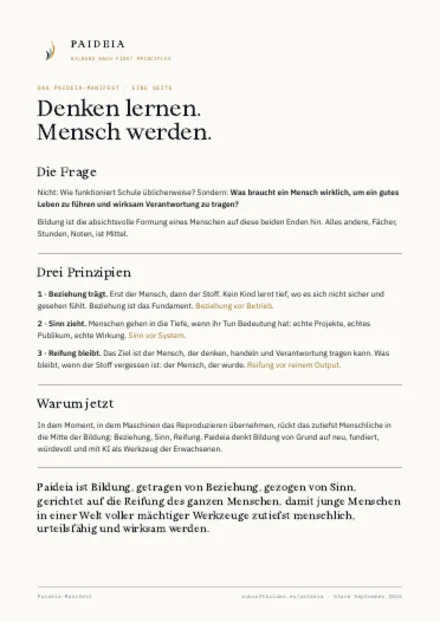
- The Paideia manifestoOne page: the question, three principles, why now.PDF · A4 · 1 Seite
- The triad as a posterRelationship carries, meaning pulls, maturation stays. For the wall in the team room.PDF · A4 · 1 Seite
- The twelve axiomsThe short version of the whole derivation, for checking every decision.PDF · A4 · 1 Seite
- Maturity stages posterSix stages with symbols, guiding values and sentences for children.PDF · A4 · 1 Seite
- Weekly and daily rhythmA day and a week as the first school lives them, as a sheet to adapt to your timetable.PDF · A4 · 1 Seite
- School check to printTwelve statements for board and leadership to take an honest look.PDF · A4 · 2 Seiten
- Heureka at a glanceThe platform in pictures: four roles, twelve capabilities, safeguards.PDF · A4 · 4 Seiten
- Paideia logo packageMark and wordmark as SVG and PNG, light and dark, with clear space.ZIP · SVG + PNG
 PDF
PDF PDF
PDF PDF
PDF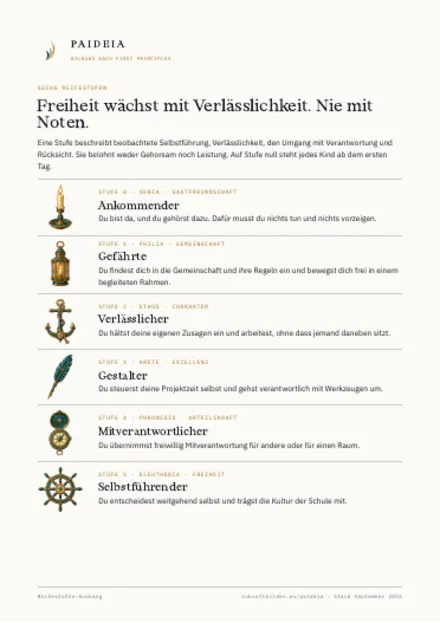 PDF
PDF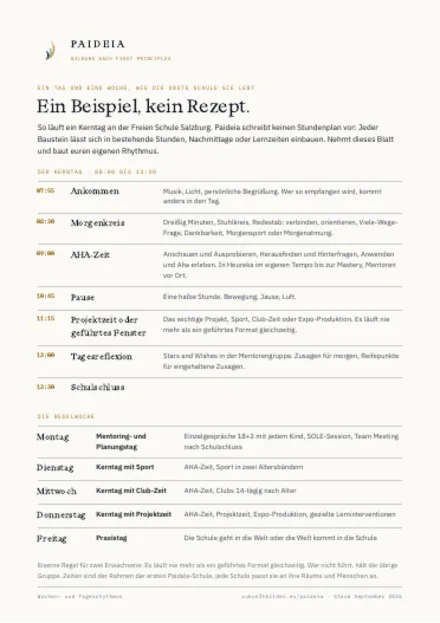 PDF
PDF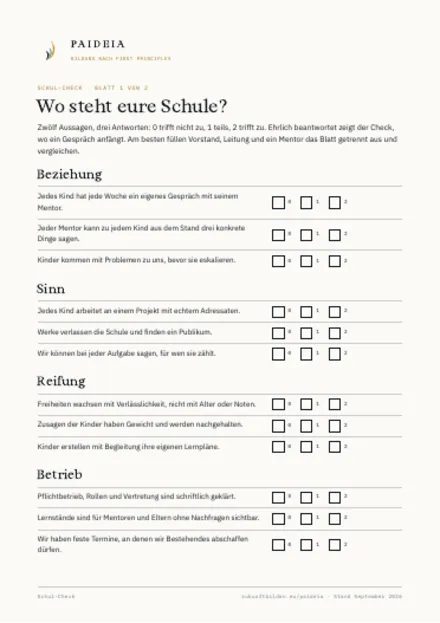 PDF
PDF PDF
PDF ZIP
ZIP
IX · The first Paideia school
Freie Schule Salzburg lives it first.
It remains Freie Schule Salzburg, Verein Kreativwerkstatt remains its operator. Paideia is the development layer behind it: core handbook, rhythms, maturity stages, Heureka and the personal guidance of the leadership. What holds there in daily practice is documented and generalised for further schools.
- Public-law status
- permanent, state-recognised certificates
- Grades
- 1 to 9, three levels: Primaria 1, Primaria 2, Sekundaria
- Operator
- Verein Kreativwerkstatt Salzburg, non-profit
- Location
- City of Salzburg
- School start with Paideia
- September 2026, Heureka as the learning platform
X · The partnership
The school stays the school. Paideia is the development layer above it.
A Paideia school keeps its name, operator, culture, curriculum and legal status, whether mainstream, independent, progressive or a learning group. Added are system, software, mentor standard and a person who shares responsibility.
Diagnosis and operating model
We check what really endangers operations and build the waterfall: required operations first, development after.
Mentor development
Teachers become Paideia mentors: one-to-ones, project guidance, feedback, conflict logic, documentation, parent communication. With 30-60-90 onboarding.
Core handbook and rhythms
The 22 chapters are translated to your school type: curriculum, timetable and certificates stay, one-to-ones, maturity stages, project path and kaizen are added.
Heureka
The learning platform with its own school tenant, data protection package, onboarding for children, mentors, parents and leadership.
Visibility
Information evening script, parent communication, website logic and admissions process so that the school becomes explainable.
Momo in person
The initiator of Paideia accompanies leadership and board directly, with a fixed number and a fixed rhythm.
Terms, built to protect the school
Required operations first
Local staff, rooms, insurance, materials, administration, association and official obligations, IT, website and the minimum reserve are covered before development and the fee follow.
Paideia fee
Approximately ten per cent of current income per child, net. At €600 school fees the reference is €60 net per child, at €410-450 school fees it is €41-45 net per child.
Delivery guarantee
Within the first six months, processes are documented, Heureka is in use, mentor training has started and visibility through Paideia is built. Otherwise the guarantee applies.
Term and licence
A two-year minimum term. Afterwards, data and core processes remain exportable. Software and mark can continue at a reference of approximately €15 per child, one quarter of the original fee.
Terms depend on the starting situation, size, risk and software scope. The price follows the starting situation, never the other way round.
When Paideia fits
Parent questions drive daily work
Paideia builds the answer architecture: what applies, who decides, when is it communicated, how are objections documented.
Education is strong, operations fragile
Paideia separates required operations, development, quality and growth so that the school grows through the organisational side.
New leadership or a new team
Role clarification, search profile, mentor logic, onboarding, team rhythm and decision paths are ready.
Future skills should become real
Reading, writing, mathematics, projects, AI, reflection and responsibility become repeatable school practices.
Frequent questions from school operators
What boards and leaders ask us first.
Do we have to use Heureka to work with Paideia?
No. Heureka, processes and quality are building blocks, each works on its own. Heureka is the strongest lever for reading, writing and mathematics. One-to-ones, maturity stages, core handbook and kaizen hold without the platform too.
What changes about curriculum, timetable and certificates?
Nothing. Paideia connects to what applies: curriculum, timetable, certificates, operator and legal status stay. Added are rhythms, roles, software and a review rhythm for quality.
What does Paideia cost a school?
Approximately ten per cent of current income per child, net, and only once required operations are covered. At €600 school fees the reference is €60 per child. From the third year a reduced licence for software and mark can follow, approximately €15 per child.
How quickly does Paideia arrive in daily practice?
Within the first six months processes are documented, Heureka is in use, mentor training has started and visibility is built. There is a delivery guarantee for that. The partnership runs for at least two years because culture takes time.
How does Heureka handle our children's data?
Data is stored in the EU, browser access to the database is fully blocked. No child's name appears in the login, only the first name goes to the AI. There are no leaderboards and no screenshots of children. A data processing agreement is signed with the school, a DPA is signed with the AI provider.
Which schools does Paideia fit?
Mainstream schools, independent and private schools, progressive schools, all-day and afternoon care, learning groups and home education. The precondition is a leadership that wants truth and growth at the same time.
Who accompanies us personally?
Momo Feichtinger, initiator of Paideia, with a fixed number and a fixed rhythm for leadership and board. Mentors receive a 30-60-90 onboarding, feedback from Heureka is usually reviewed within 48 hours.
Learn to think.
Become human.
Educational. Organisational. Economic.
XI · The conversation
If your school should carry Paideia, it starts with an honest diagnosis.
For school operators, boards, leaders and founding teams. Send us your situation, we read it personally and say whether and how Paideia fits.
Inside the ZukunftBilden system
Paideia belongs to the schools. Everything else hangs from it.
Freie Schule Salzburg
The first Paideia school: rooms, team, admissions, costs and the opening ring to experience.
OpenWhat should school deliver today?
A note from Momo's garden of thinking, with evidence and neighbours.
OpenHow an idea becomes a school
The path from the first question to the school start, as a note to think on.
OpenWorld Modeling
The thinking principle behind Paideia: make assumptions visible, test them, build better.
OpenColearning
The ideal education day per week for entrepreneurial young people, every Saturday in Salzburg.
OpenDragon Dynamics
Social and emotional learning with tabletop role-playing, free trial session every first Sunday.
Open